The digital divide is a term used to describe the gap between those who have access to digital technology and the internet and those who do not. This divide can affect generations and be influenced by a variety of factors. This can include socioeconomic status, geography, and education. As today’s society becomes more integrated with technology, the effects of the digital divide are more prominent. It presents significant challenges as the technologies, tools, and skills needed to participate in the digital world increase.
The current state of digital divide and access is great. A last report from the Federal Communications Commission (FCC) reported that almost 19 million Americans still lack access to broadband internet. The majority of this inequity affects individuals residing in rural areas. Rural is defined by the U.S. Census Bureau as “any population, housing, or territory that is not included within an urbanized area or urban cluster.” More than 30% of rural Americans are without access to high-speed internet, compared to just 1% of urban residents. This discrepancy means that in an information-rich economy where digital transactions and commercial sharing services are a key element of living and infrastructure, rural Americans are left behind. The lack of reliable digital connectivity limits access to education, healthcare, employment opportunities, and many social services. For example, during COVID, students in rural areas are at a disadvantage regarding remote learning opportunities. The lack of multiple devices to access broadband and media affected multiple students who struggled to keep up with school work and overall education. This educational gap affected most students in school, however, in rural America, the long-term consequences can affect students’ ability to compete with urban students with better access and connection.
An example of the digital divide in rural America can be found in the state of Kentucky, specifically Bell County. This county is largely composed of low-income households, with over 40% of families in the region relying on mobile data for internet access. Because of this, families experience high costs and limited bandwidth. With the lack of broadband access, children struggle to complete homework, parents have difficulty applying for jobs, and critical information may not be accessed in a timely fashion. This case is not unique to Bell County, for many low-income and rural areas, without adequate support to bridge the digital divide, many people and businesses risk falling behind.
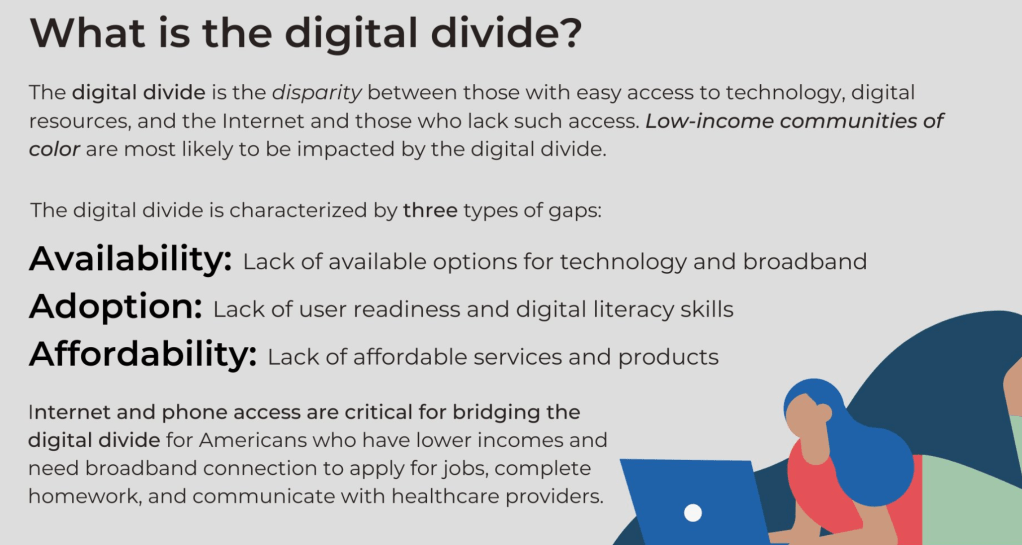
Bridging the digital divide is not merely about connectivity; it’s about empowering individuals and communities to harness the potential of technology to improve their quality of life. As society becomes increasingly digital, addressing these disparities is not optional; it is essential for ensuring a more equitable future for all. Without concerted efforts to bridge this gap, we risk leaving entire communities behind in what has now become an essential service: access to information and the digital economy.
To enhance digital access in underserved communities, having a comprehensive and actionable plan that includes strategies for sustainable implementation and community engagement is important. Efforts such as the non-profit organization “Connected Nation” are working to develop comprehensive maps of internet access to inform federal and state policy while guiding community leaders to prioritize internet deployment.
Starting with an assessment of the community’s existing digital access, communities can identify areas with the least connectivity and the specific populations most affected. Deploying surveys, focus groups, and community meetings allows for gathering qualitative feedback on barriers to digital access. Launching digital literacy programs in partnership with stakeholders, leaders, and influencers aimed at equipping residents with the necessary skills to utilize technology effectively is vital for ensuring that access translates into opportunity. Monitoring and evaluating the effectiveness of these programs regularly and adjusting as necessary to meet changing community needs creates a pathway to sustainability for communities.

 Nicole Hamm
Leave a comment